
When we analyze global social progress, understanding how resources flow into communities is essential. But how does giving actually function on the ground in Asia compared to the West?
Philanthropy doesn’t look the same everywhere. From the causes people support to how technology is used, Western and Asian models operate on very different playbooks, and money is far from the whole story. For example, in Asia, the state plays a distinct, substantive role in enabling social impact, creating unique dynamics between donors, corporations, and national priorities.
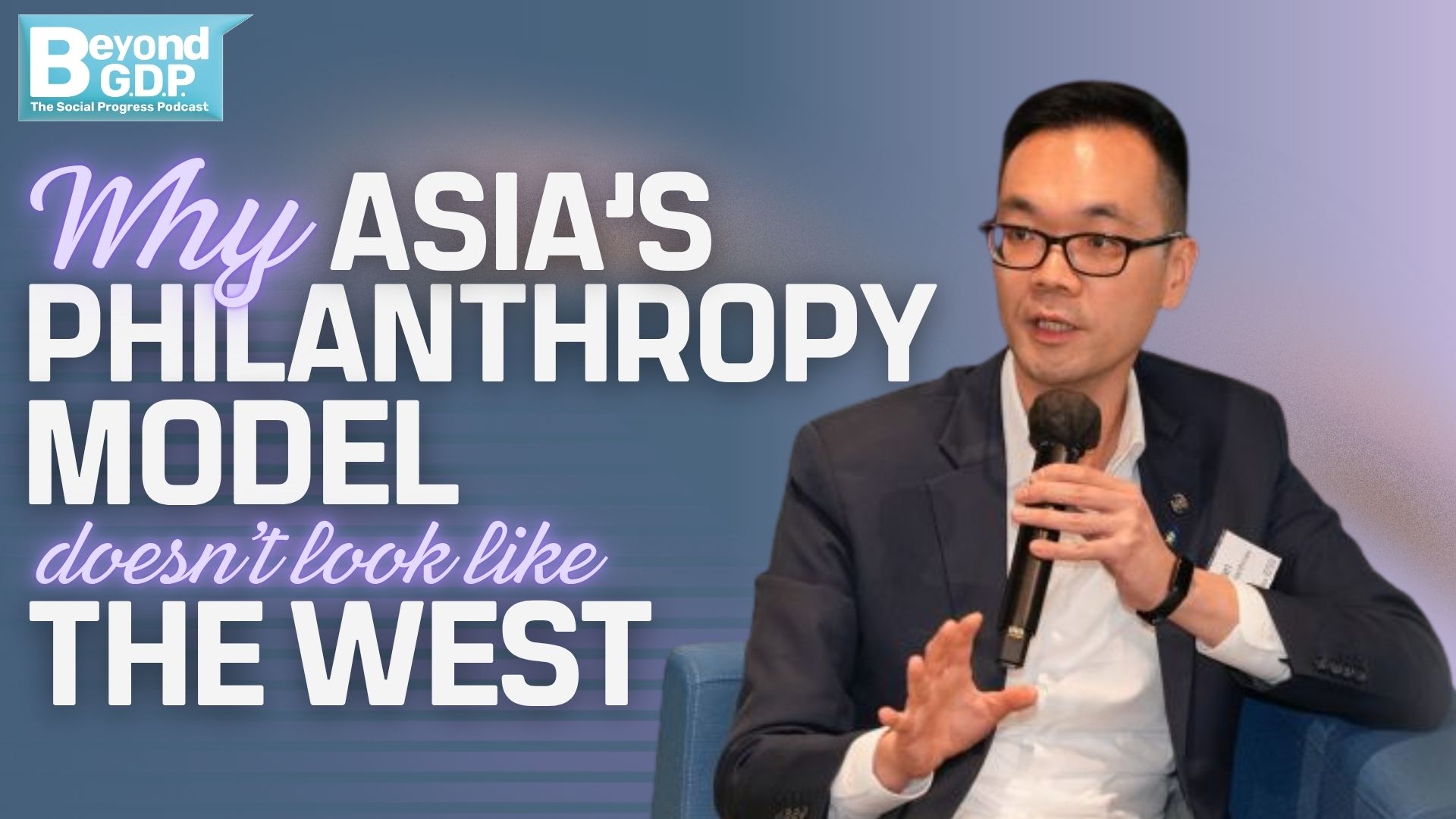
In our new episode of Beyond GDP: The Social Progress Podcast, host Michael Green invited Brian San, Secretary General of the Institute for Philanthropy in Hong Kong, Asia's single largest philanthropic funder. They discuss why high-net-worth donors account for a much smaller fraction of giving in Asia compared to the United States and how mandatory corporate social responsibility laws in countries like India and new digital platforms are transforming civic participation in donation campaigns.
Describing the Institute as a "thinking, funding, and doing tank," Brian shares how they work to make philanthropy more effective across Asia, from Saudi Arabia to Japan. Rather than relying only on financial contributions, they’ve explored the importance of using existing corporate supply chains, digital infrastructure, and local networks to deliver solutions to communities faster and more efficiently.
Listen now to learn about what the primary issues people in Asia normally support are, what corporations are trying to achieve with their giving, and how governments act as an active partner in philanthropy.
Plus, Brian reveals the single biggest catalyst behind the billions of dollars flowing into Asian philanthropy over the past decade.


