
Why does Costa Rica consistently outperform nations three times its size and wealth, on measures of social progress? The answer isn't just stunning beaches or coffee. Their success isn't luck; it's a strategy that started decades ago.
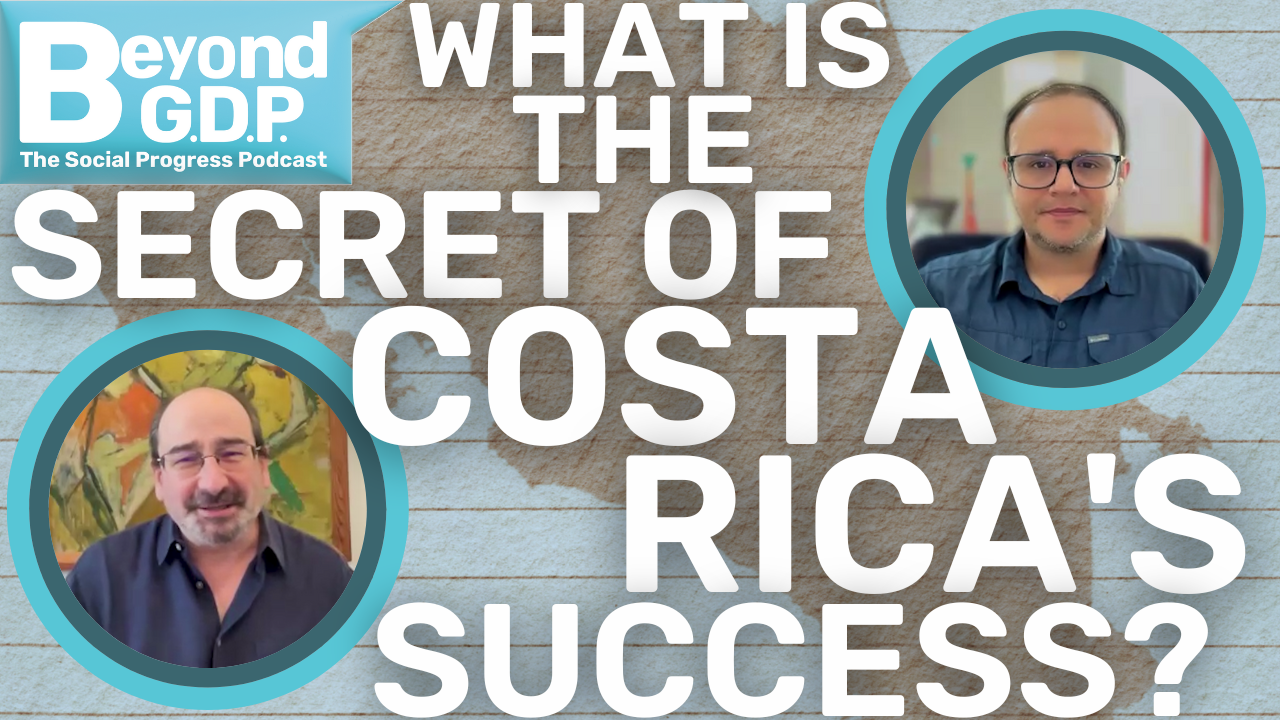
In Episode #3 of Beyond GDP: The Social Progress Podcast, host Michael Green sits down with Jaime García, Director of Impact and Sustainability at INCAE Business School and Regional Director at Social Progress Imperative, to unpack Costa Rica's remarkable social progress story.
Costa Rica’s social arrangements and institutions set it on a unique developmental path from the very beginning. They have invested in innovation; for example, San José was one of the first cities in America with public electric lighting, even before the United States.
Jaime contrasts Guatemala's history with Costa Rica's, explaining that early decisions led Guatemala to focus on protecting elites and extractive industries. In contrast, Costa Rica, initially poorer, recognized that inclusive growth and community collaboration were essential for survival, leading to institutions that benefited all.
The conversation also highlights a defining moment in the 20th century: a decision that changed the country's development trajectory, freeing up resources for massive investment in human capital.
The discussion reminds us that basic needs don't always have to come first to achieve the best results. While many models prioritize Maslow’s hierarchy (basic needs first, then higher freedoms), Costa Rica’s experience suggests the opposite.
García and Green point out that the country's early focus on rights and voice, which the Social Progress Index measures in the Opportunity dimension, didn't come last; it served as an engine for future progress.
"If you invest in personal rights, in freedom and inclusiveness, actually you're going to have better outcomes in education, in health." says Jaime García.
While celebrating its history, the conversation doesn't shy away from current challenges. Green and García critically examine the Social Progress Index data from the past 15 years, noting that Costa Rica's progress appears to have stalled in certain areas.
They identify the major inflection points, including issues with personal safety and advanced education, and reveal the existence of “Two Costa Ricas”. They discuss why social progress has clustered so effectively in the metropolitan area, leaving the coasts and borders lagging behind.
What lessons can other countries learn from Costa Rica’s success, and how must Costa Rica adapt to maintain its edge in the 21st century?
Jaime García shares the five main strategies Costa Rica uses to attract investment, which together form what he calls the Pura Vida Formula.
Watch now or listen on Spotify or Apple Podcasts.
Don't forget to follow and rate our show! This helps us keep posting new episodes.
Why does Costa Rica consistently outperform nations three times its size and wealth, on measures of social progress? The answer isn't just stunning beaches or coffee. Their success isn't luck; it's a strategy that started decades ago.
In Episode #3 of Beyond GDP: The Social Progress Podcast, host Michael Green sits down with Jaime García, Director of Impact and Sustainability at INCAE Business School and Regional Director at Social Progress Imperative, to unpack Costa Rica's remarkable social progress story.
Costa Rica’s social arrangements and institutions set it on a unique developmental path from the very beginning. They have invested in innovation; for example, San José was one of the first cities in America with public electric lighting, even before the United States.
Jaime contrasts Guatemala's history with Costa Rica's, explaining that early decisions led Guatemala to focus on protecting elites and extractive industries. In contrast, Costa Rica, initially poorer, recognized that inclusive growth and community collaboration were essential for survival, leading to institutions that benefited all.
The conversation also highlights a defining moment in the 20th century: a decision that changed the country's development trajectory, freeing up resources for massive investment in human capital.
The discussion reminds us that basic needs don't always have to come first to achieve the best results. While many models prioritize Maslow’s hierarchy (basic needs first, then higher freedoms), Costa Rica’s experience suggests the opposite.
García and Green point out that the country's early focus on rights and voice, which the Social Progress Index measures in the Opportunity dimension, didn't come last; it served as an engine for future progress.
"If you invest in personal rights, in freedom and inclusiveness, actually you're going to have better outcomes in education, in health." says Jaime García.
While celebrating its history, the conversation doesn't shy away from current challenges. Green and García critically examine the Social Progress Index data from the past 15 years, noting that Costa Rica's progress appears to have stalled in certain areas.
They identify the major inflection points, including issues with personal safety and advanced education, and reveal the existence of “Two Costa Ricas”. They discuss why social progress has clustered so effectively in the metropolitan area, leaving the coasts and borders lagging behind.
What lessons can other countries learn from Costa Rica’s success, and how must Costa Rica adapt to maintain its edge in the 21st century?
Jaime García shares the five main strategies Costa Rica uses to attract investment, which together form what he calls the Pura Vida Formula.
Watch now or listen on Spotify or Apple Podcasts.
Don't forget to follow and rate our show! This helps us keep posting new episodes.



.jpg)
