
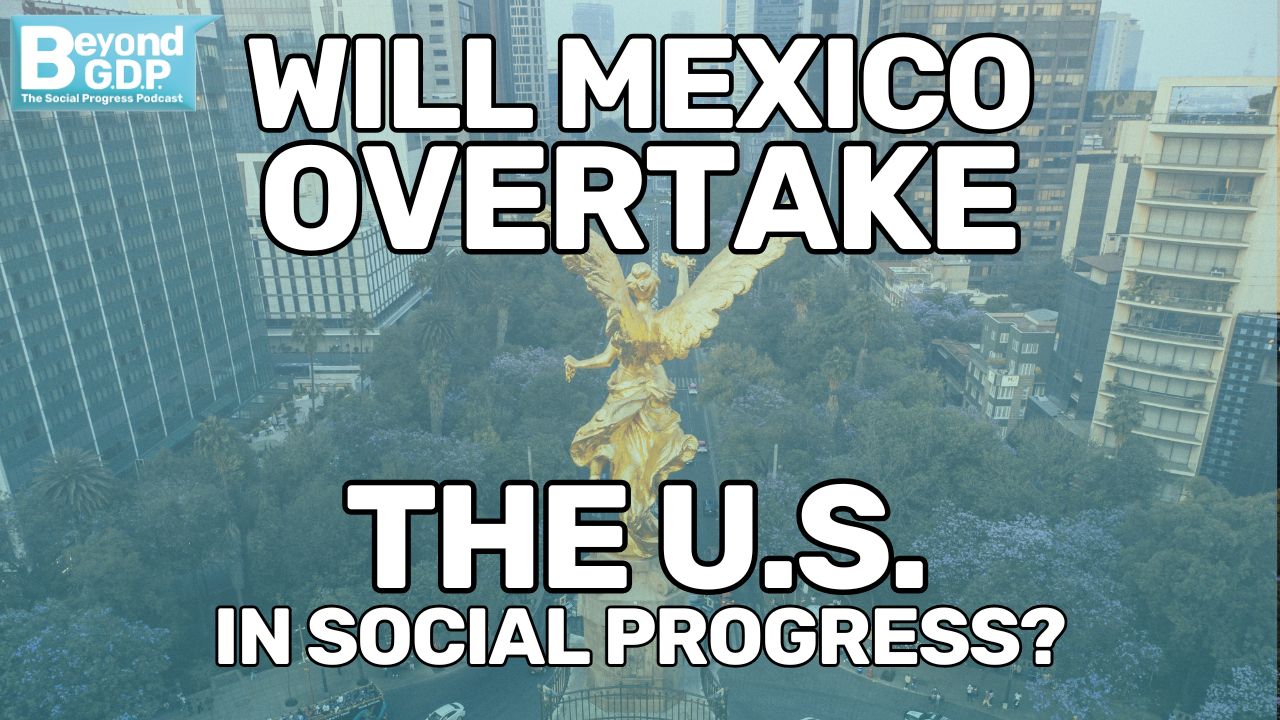
“Social progress is not a cost; rather, investments in social progress are investments in competitiveness and future economic success, which is important,” explains Michael Green in our new episode of Beyond GDP: The Social Progress Podcast.
During the conversation with Sofía Ramírez, Director of México ¿cómo vamos?, an intriguing picture emerged: if current trends continue, Mexico might overtake the U.S. in social progress within the next two decades. Listen to the episode to find out why.
It’s crucial to also focus on a different perspective that goes beyond what is most commonly known about Mexico: its safety issues. Despite the challenges, Mexico has shown remarkable resilience and consistency in maintaining high levels of happiness, a testament to its civic strength and community values.
Mexico is a strong asset in North America, and while it is not always taken into consideration when we speak about the region, Mexico has proven to deliver a comparable quality of life in some of its states (Aguascalientes, Querétaro, or Yucatán) to U.S. states like Texas, Arkansas, and Louisiana. This comparison can be analyzed in the Shared Prosperity Map developed in partnership with México, ¿cómo vamos?. Social realities differ across states; understanding local nuances ensures tailored policies that address specific needs, making development more effective. The map has also allowed decision-makers to learn from other states' success stories, which they can be inspired by or replicate in their communities.
Sofía also shared two main impact cases on how decision-makers have used another tool they have developed: The Social Progress Index for the Mexican States. She says that:
“ The private sector in Mexico has been using the Social Progress Index for the Mexican States. They use it as a tool to engage with local governments and drive change across industries to address critical problems in the North and South of the country. The Social Progress Index is not just an academic discussion; it changes people’s lives.”
México, ¿cómo vamos? has also been collaborating with Nuevo Laredo and its local authorities. The main goal has been to create a program to address local issues, such as housing. They have been relying on urban projections for the next 10 years and on the Social Progress Index and its variables at the municipal level.
México, ¿cómo vamos? curiosity doesn’t stop with the index results. They compare the data alongside Foreign Direct Investment announcements not only to identify actionable insights but also to inform investors' business plans. They have discovered that the higher a state's social progress, the more FDI announcements it attracts. Investors are interested not only in employing the community or allocating new people there, but also in investing in a more stable place. Sofía highlights that this has served as a wake-up call for other states that are missing these opportunities because they don’t support social progress.
Listen to the full conversation to learn more about the three main challenges slowing down the country, how Mexico could overtake the U.S. in social progress in a few years, and how Mexico could be the key to building a more inclusive and prosperous North America.
“Social progress is not a cost; rather, investments in social progress are investments in competitiveness and future economic success, which is important,” explains Michael Green in our new episode of Beyond GDP: The Social Progress Podcast.
During the conversation with Sofía Ramírez, Director of México ¿cómo vamos?, an intriguing picture emerged: if current trends continue, Mexico might overtake the U.S. in social progress within the next two decades. Listen to the episode to find out why.
It’s crucial to also focus on a different perspective that goes beyond what is most commonly known about Mexico: its safety issues. Despite the challenges, Mexico has shown remarkable resilience and consistency in maintaining high levels of happiness, a testament to its civic strength and community values.
Mexico is a strong asset in North America, and while it is not always taken into consideration when we speak about the region, Mexico has proven to deliver a comparable quality of life in some of its states (Aguascalientes, Querétaro, or Yucatán) to U.S. states like Texas, Arkansas, and Louisiana. This comparison can be analyzed in the Shared Prosperity Map developed in partnership with México, ¿cómo vamos?. Social realities differ across states; understanding local nuances ensures tailored policies that address specific needs, making development more effective. The map has also allowed decision-makers to learn from other states' success stories, which they can be inspired by or replicate in their communities.
Sofía also shared two main impact cases on how decision-makers have used another tool they have developed: The Social Progress Index for the Mexican States. She says that:
“ The private sector in Mexico has been using the Social Progress Index for the Mexican States. They use it as a tool to engage with local governments and drive change across industries to address critical problems in the North and South of the country. The Social Progress Index is not just an academic discussion; it changes people’s lives.”
México, ¿cómo vamos? has also been collaborating with Nuevo Laredo and its local authorities. The main goal has been to create a program to address local issues, such as housing. They have been relying on urban projections for the next 10 years and on the Social Progress Index and its variables at the municipal level.
México, ¿cómo vamos? curiosity doesn’t stop with the index results. They compare the data alongside Foreign Direct Investment announcements not only to identify actionable insights but also to inform investors' business plans. They have discovered that the higher a state's social progress, the more FDI announcements it attracts. Investors are interested not only in employing the community or allocating new people there, but also in investing in a more stable place. Sofía highlights that this has served as a wake-up call for other states that are missing these opportunities because they don’t support social progress.
Listen to the full conversation to learn more about the three main challenges slowing down the country, how Mexico could overtake the U.S. in social progress in a few years, and how Mexico could be the key to building a more inclusive and prosperous North America.



.jpg)

