
Just in the US, people with serious mental health conditions face a 25-year reduction in life expectancy. By comparison, cancer cuts life short by about 15 years and heart disease by 5 to 15 years. This is not only caused by their internal struggles; it’s also about how society treats them. From discrimination in jobs and housing, the entire system is set up to fail.
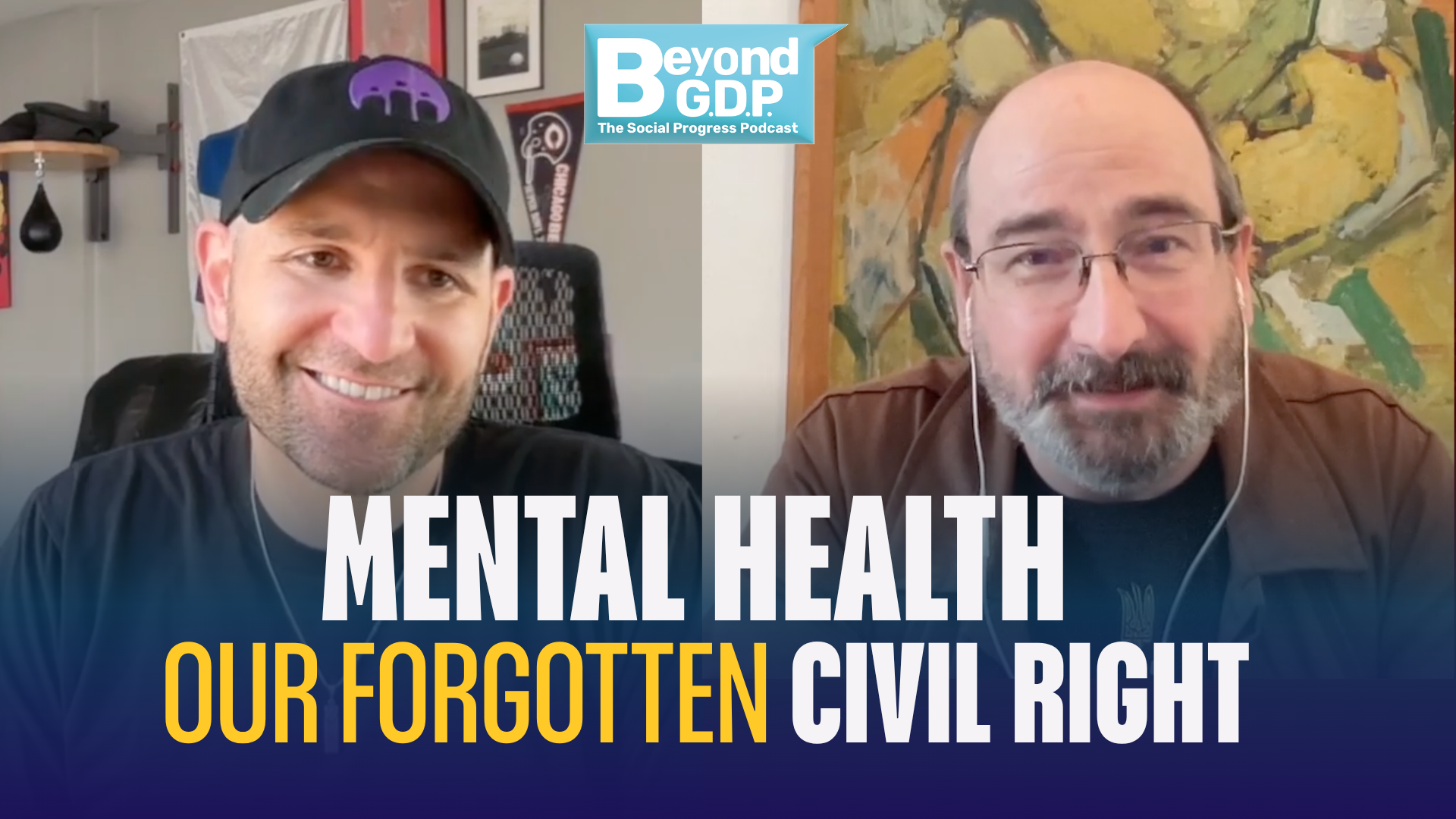
We invited Jono Wilde, Executive Director at The Good Life Movement, to share with us how addressing mental health as a civil right could be the solution. Instead of just talking about treatment or awareness, framing it as a civil rights issue could overhaul how society responds to those suffering with mental health conditions.
If you woke up this morning with a fever, you wouldn’t hesitate to log a sick day. But what if you woke up with a panic attack? Suddenly, the narrative changes. Some wouldn't report this at work because they lack the confidence, the vocabulary and even the protocols to get real support. The system wasn’t designed to prioritize mental health.
In this episode of Beyond GDP: The Social Progress Podcast, Jono shares a bold framework that could revolutionize mental health policy in the U.S. and beyond. It covers everything from anti-discrimination protections to youth education, community funding, innovative research and more. It also offers clear solutions and ideas on how we can all support this movement. Advocating for systemic change isn’t easy, but each one of us can make a difference if we address the issue at the root.
You’ll learn how talking openly, investing wisely, and enacting civil rights legislation can transform mental health care and save lives.
Just in the US, people with serious mental health conditions face a 25-year reduction in life expectancy. By comparison, cancer cuts life short by about 15 years and heart disease by 5 to 15 years. This is not only caused by their internal struggles; it’s also about how society treats them. From discrimination in jobs and housing, the entire system is set up to fail.
We invited Jono Wilde, Executive Director at The Good Life Movement, to share with us how addressing mental health as a civil right could be the solution. Instead of just talking about treatment or awareness, framing it as a civil rights issue could overhaul how society responds to those suffering with mental health conditions.
If you woke up this morning with a fever, you wouldn’t hesitate to log a sick day. But what if you woke up with a panic attack? Suddenly, the narrative changes. Some wouldn't report this at work because they lack the confidence, the vocabulary and even the protocols to get real support. The system wasn’t designed to prioritize mental health.
In this episode of Beyond GDP: The Social Progress Podcast, Jono shares a bold framework that could revolutionize mental health policy in the U.S. and beyond. It covers everything from anti-discrimination protections to youth education, community funding, innovative research and more. It also offers clear solutions and ideas on how we can all support this movement. Advocating for systemic change isn’t easy, but each one of us can make a difference if we address the issue at the root.
You’ll learn how talking openly, investing wisely, and enacting civil rights legislation can transform mental health care and save lives.


.jpg)

.jpg)

